Large Drive Unit Coolant Leak
This issue is relevant only when the car has a Large Drive Unit. Many Performance variants and rear-wheel-drive Model S vehicles use an LDU, but the exact drive-unit configuration belongs to the specific car. Confirm what is installed before applying this guidance.
Applicability
Start with the exact model, trim, build timing, and drive-unit records. A trim-level guide can tell you when the LDU deserves attention, but it cannot identify the unit or repair history on one vehicle.
How the coolant path works
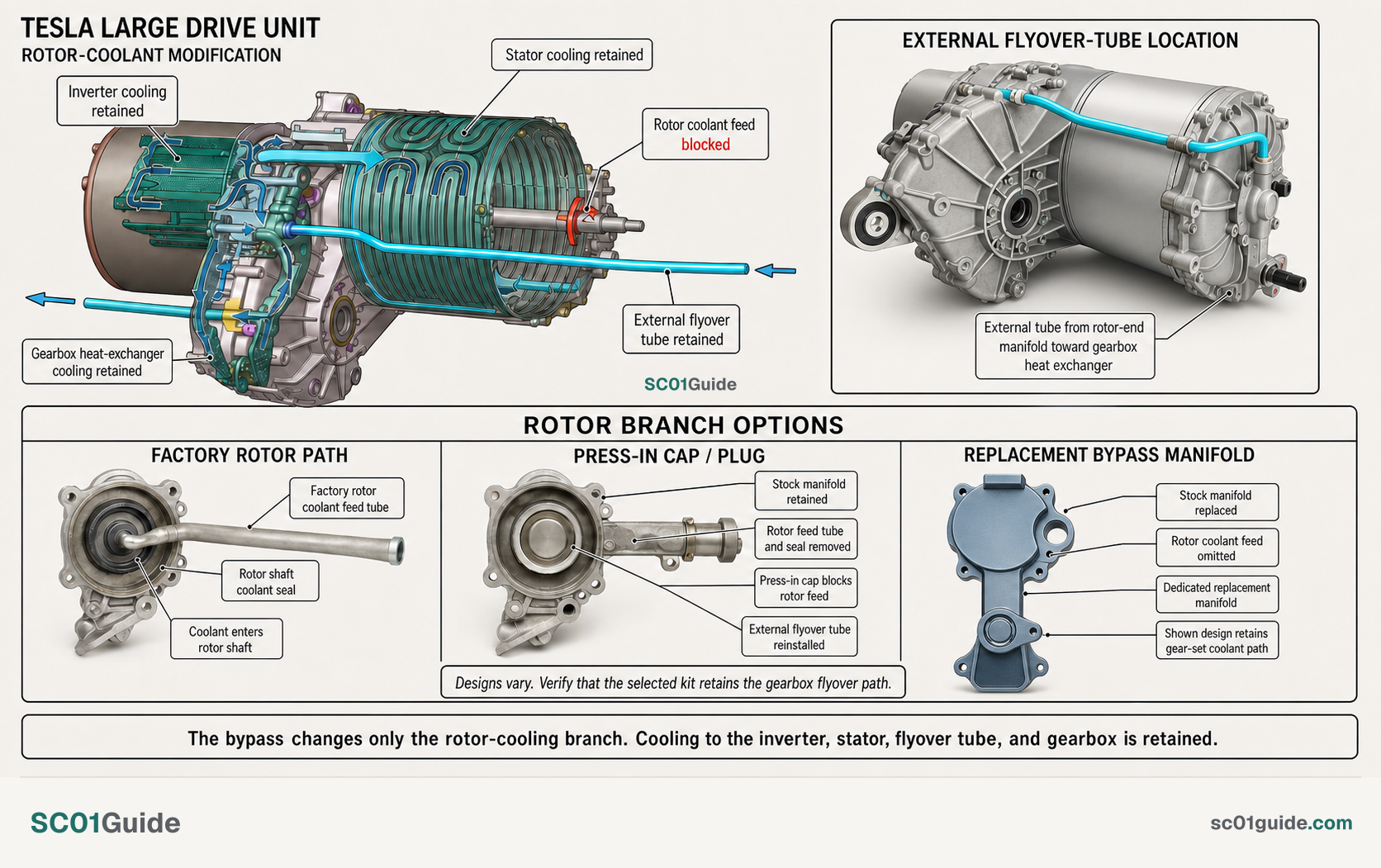
The original LDU design routes coolant through the rotor area. An internal seal separates that coolant path from the rest of the drive unit. If fluid passes that seal, it can reach components that were not intended to be wet. Coolant contamination can wash lubricant from bearings, contribute to corrosion, and reach nearby electronics. The amount of damage depends on how long the leak has been present and what the shop finds inside the unit. The figure shows the original path and the basic idea behind a bypass.
What a leak can look like
Internal evidence
Moisture, condensation, blue coolant, or coolant-tinted grease at the rotor-speed sensor area can fit this failure mode. The sensor and bore are inspection points for a qualified Tesla specialist.
Vehicle symptoms
New drive-unit noise, reduced power, or a powertrain-service warning deserves prompt diagnosis. These symptoms are not unique to an LDU coolant leak, so they should not be used as proof on their own.
What you may not see
The leak can remain inside the drive unit. The absence of a puddle, dashboard warning, or obvious driving symptom does not rule it out.
Inspection guidance
Ask a qualified Tesla specialist to identify the drive unit and inspect it for signs that fit this failure mode. A common inspection point is the rotor-speed sensor and its bore. Access can involve removing the sensor, so this should be performed by a shop that knows the LDU and can document what it finds. Bring service records and any invoices for drive-unit work.
A dry inspection is one observation, not proof that the seal has never leaked or will remain dry. If contamination is present, ask the shop to assess bearing condition, corrosion, electronics, noise, and stored faults before treating a coolant-path modification as the whole repair.
Compare the repair approaches
Coolant bypass or coolant delete
Stops coolant from entering the rotor path. A shop may install a delete cap in the coolant-manifold bore or replace the manifold with one that has no rotor-coolant passage. The other cooling paths remain in service. Ask which method and parts were used, because the work is internal and is not confirmed by a casual exterior inspection.
Drain or weep-hole approach
Provides a path for escaped fluid to leave the housing if an internal leak develops. It can reduce pooling, but it does not stop the seal from leaking or prevent continued coolant loss. It is not the same repair as a bypass or delete.
Replacement drive unit
Replaces the drive unit rather than modifying the one already installed. Some replacement units described as Revision U omit the rotor-coolant path. Do not assume every replacement has that design. Confirm the part number and revision, installation date, and warranty shown on the service record.
What changes the scope of the work
A preventive bypass and a repair after internal contamination are not the same job. The LDU may need to be removed for a delete-cap or manifold replacement, and existing bearing, inverter, or corrosion damage can expand the work beyond changing the coolant path. Ask for a written estimate that separates prevention, internal repair, and full drive-unit replacement. Current pricing varies by shop, method, vehicle, and what the inspection uncovers.
How to verify prior work
- Request the shop invoice and installation date.
- Ask whether the work used a delete cap, a replacement manifold, a weep hole, or a complete drive unit.
- Check the records for terms such as coolant delete, rotor-manifold replacement, delete cap, or Revision U.
- Match replacement-drive-unit claims to the recorded part number and revision. A seller's statement that the motor was replaced does not identify the replacement design.
- Have a specialist inspect the car when the records are incomplete.
- Treat undocumented work as unconfirmed and include inspection and a current repair estimate in the purchase decision.